Thursday, 19 December 2013

'Spectacular Spectacular' - Moulin Rouge and its costumes

Being into music, without a doubt, one of the films that I just had to watch was Moulin Rouge. I thank the heavens that I did so at the beginning of our school semester since once presented with our assignment for film, I immediately thought of this particular film and it's wonderful costumes, especially those pertaining to the main female character. That was part of the main inspiration for my concept - designing a classy yet modern evening gown.


Moulin Rouge is a 2001 Australian-American romantic pastiche-jukebox musical film directed, produced and also co-written by Baz Luhrmann. Featuring the talents of the stunning Nicole Kidman (Satine) and Ewan McGregor (Christian), it tells the story of a young English man (McGregor) who travelled to Paris in the year 1899 to become a writer and make part of Montmartre's Bohemian movement. After accidentally meeting artist Toulouse-Lautrec and his fellow performers, he helps them finish their show 'Spectacular Spectacular' in the hope of selling it to Harold Zidler, owner of the Moulin Rouge. Christian is set to meet Satine (Kidman), the star courtesan of the cabaret. At the same time, Zidler is making arrangements with the wealthy Duke of Monroth, a potential investor in the cabaret. Satine mistakes Christian for the Duke, but soon learns that Christian is just a writer - though that didn't stop them from falling in love. After a series of events the Duke soon realises that the play is a metaphor for the love triangle consisting of Christian, Satine and the Duke himself, and demands a change in ending. The Duke warns Zidler that he will have Christian killed if Satine is not his. When Zidler informs Satine that she is dying, she tells Christian that they can no longer see each other because she will be staying with the Duke. Christian becomes depressed, and on the night of the show, he sneaks back into the Moulin Rouge. Suddenly finding himself in the spotlight, Christian pretends to be an actor, and finally walks off the stage in anger, only to return as Satine begins to sing the song Christian had previously written to express their love for each other. The Duke and his bodyguards try to kill Christian, but both attempts fail. As the show ends and the curtain closes, Satine succumbs to her illness, whose last words affirm her love towards Christian. The film ends with Christian at his typewriter a year later - 1990 - writing the tale of the two lovers. 

Costume design is essential in any film, together with the script, actors and soundtrack. Though probably on a subconscious level, the costumes determine how the audience portrays the characters that wear them. Through powerful colours and sparkling accessories, the audience may come to know of the character's role in the film as being central, while being part of the background when characters are seen in less varying costumes. It is worth noting that this film won an Oscar for Best Costume Design, and it was well-deserved in my opinion seeing as the level of creativity shown by the main costume designer Catherine Martin is of extremely high level. For me, she succeeded in giving the audience a glimpse of real people and theatre characters in the 1900s while also modifying them and giving the audience a more modern view. Particular attention must be paid to the costumes worn by lead actress Nicole Kidman. In an interview with national British newspaper The Guardian, Martin says:

"With Satine, we needed to make it clear that this is the most beautiful woman in Paris. Admittedly, Nicole is already very beautiful, but she may not be everybody's idea of ideal beauty, so we needed to make it clear with the costumes' signs and symbols that that's who she was. We looked to Hollywood's glamour heroines like Marlene Dietrich, Marilyn Monroe, Greta Garbo - all sexually available to the men in the movies but emotionally very unavailable, and we looked at how that manifested itself in their clothing. Their wardrobes tended to be very graphic, unfussy, dramatic in their colour choice. We then used that." 
(Martin, 2001)

There are two particular costumes which struck me most - the first being the Red Dress, also known as the "Smoldering Temptress" Dress.
.


As one can see from the above costume designs, Satine's iconic Red Dress went through various before it arrived at the one used in the film. Made of red satin, with a corseted top that laces in the back and an intricate bustle, the dress is perhaps the most famous from the film. The colour of the dress was cleverly chosen to reflect Satine's character in the scene, primarily because it draws attention to her, and it also reflects her attempt at softening the Duke to invest in the show.

The second costume which I will probably use as a reference point in my design process is the Gothic Tower Dress. With reference to accessories, it is worth noting the necklace used in this scene.


The dress is made entirely of  black velvet, trimmed with reddish-brown fur along the train and the one shoulder. It is a pity that this detail is barely noticeable due to the minimal lighting used in the scene so as to reflect the unsettling atmosphere in the scene. The necklace worn by the actress was designed by Stefano Canturi and consisted of 1, 308 real diamonds and platinum, and was the most expensive piece of jewellery ever specifically made for a film. 

I couldn't help but add some more images of costumes from this film. To me, each one is a magnificent piece of art. 


References:

IMDb. Moulin Rouge! (2001) [online]. Available at <http://www.imdb.com/title/tt0203009/?ref_=ttfc_fc_tt> [Accessed 19th December, 2013]

Hadley Freeman, 2001. Can-can do [online]. Available at <http://www.theguardian.com/film/2001/sep/07/fashion> [Accessed 19th December, 2013]


Video Source:

https://www.youtube.com/watch?feature=player_embedded&v=MANzKbDuNw8


Image sources:

http://www.costumersguide.com/moulinrouge/ref17.jpg

http://www.costumersguide.com/moulinrouge/ref20.jpg

https://blogger.googleusercontent.com/img/b/R29vZ2xl/AVvXsEha9Jp4EWWsTMGPNFbO106WbNsGqdUVytQdkH734QJ3hMOZaybsK7E_8Ano_wJCmGF9Dfz7T3RTe-tVDyt1gjDDsGGgjPAXUQoiUunwC4Ht3y8wyOlFVt96h4WsAuC_NeM5PfPTSNJaNcKm/s400/mcx-top-movie-dresses-moulin-rouge-xln.jpg

http://www.costumersguide.com/moulinrouge/gothic5.jpg

https://blogger.googleusercontent.com/img/b/R29vZ2xl/AVvXsEh3AdpmV6oqbpblFy2gfb9Hjn34iEfzBd01E80Zau9IvlxbpS4bEkZveuvif2jHuWllA8HPzubWp16QWomDXVcpaq4dE_kyM9dzU4H4mH2vpq1jaYEHu4LjbB-yE1LbqtJ-UXSsTp1zywqL/s400/gothic2.jpg

https://blogger.googleusercontent.com/img/b/R29vZ2xl/AVvXsEiha29_OT7M-Srocdy9s0VomQFNfqo50lPBzR2Io2woCL2TiGXEm1mus0JHiWpUmsfV1_6bXPbRST9eSLTs3jSwkiEIWFcaMECb5iNMzxqNqsPUBHZR1hKmghjp3vVvQYfIWSBRgI3y-9if/s400/2013-05-07+07.17.45+pm.png

http://www.costumersguide.com/moulinrouge/black1.jpg

http://insightandout.files.wordpress.com/2011/10/moulin-rouge-nicole-kidman.png

http://www.costumersguide.com/moulinrouge/corset1.jpg

https://blogger.googleusercontent.com/img/b/R29vZ2xl/AVvXsEjxXoHLmImsHNJwFXG0AOvO53q1d8zYXttz3Fd4t3D5qf824xXFi9fQuk5vi0cvIPe2Sdyj6Ub0Hk02CidHUWXfvaYY5VdTuW0DLbictWyBAJ-zWlO5tXIiYM5MrQwgcxFryy5QwzStC_Ox/s400/2013-05-07+07.14.59+pm.png

http://bios.weddingbee.com/pics/127250/satineweddingdress1.jpg

http://www.costumersguide.com/moulinrouge/hindi9.jpg

Monday, 16 December 2013

(Original) Elsa Schiaparelli - "that Italian artist who makes clothes"

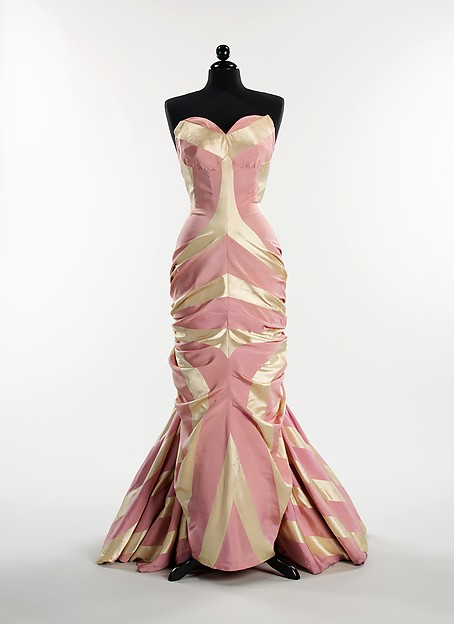
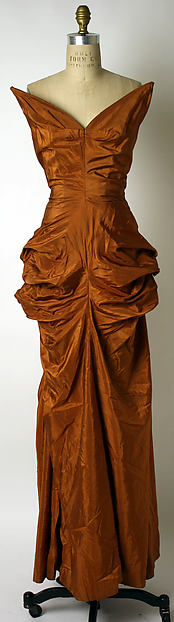
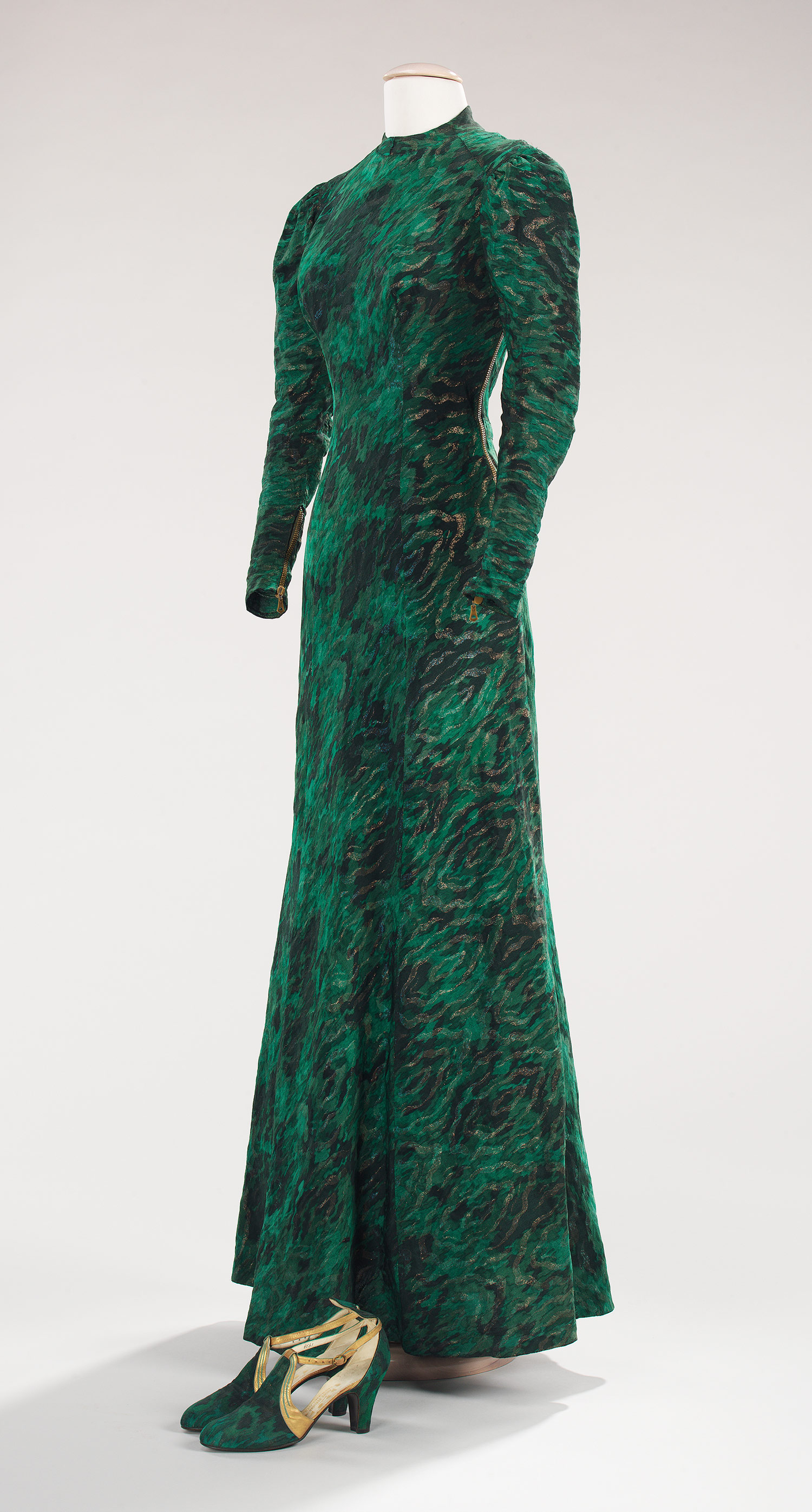
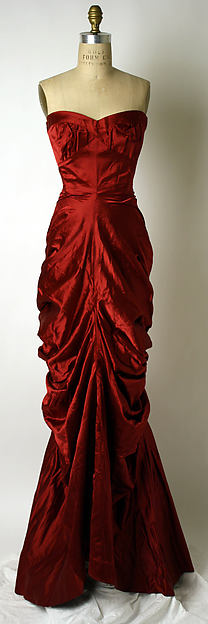
The main idea for my visual concept is to design an evening gown with a twist, in that I want it to be elegant and classy yet modern. As I was conducting research for my previous blog posts, I came across a designer who was influenced by the Futurist movement - one of the avante-garde movements of the early 20th century which focused on dynamism, movement and modernity. I am talking about none other than Elsa Schiaparelli. My main aim is to focus on recreating a similar dress structure to that designed by the mentioned designer and also to be inspired by the patterns and colours she used in her designs.

"that Italian artist who makes clothes"
(Coco Chanel, n.d.)

Those were the words used by famous rival fashion designer Coco Chanel to describe Elsa Schiaparelli. Born in Rome in 1890 in an aristocratic family, Elsa showed signs of the need for personal freedom from a very young age - an aspect which would show up in her work later on. Living life with a certain amount of luxury thanks to her parents' wealth and social status was considered a bonus - in the eyes of others. On the contrary, she believed that luxury was stifling to her art and creativity, thus leading to her moving to New York City and later on to Paris. It was in 1927 that Shiaparelli began to design and make clothes with the encouragement of Paul Poiret, and later in that same year she started her own business.

Her first collection consisted of sweaters adorned with surrealist trompe l'oeil images - a theme that was to become Schiaparelli's trademark. It consisted of a black sweater with a white trompe l'oeil scarf at the neck. which was a particular success and was selected to appear in French Vogue. She then moved on to produce a collection named Pour le Sport, including clothing such as bathing suits, skiwear and linen dresses. She also created the revolutionary divided skirt. In 1931, Schiaparelli added evening-wear to her repertoire, strengthening her business further. Collaborating with Surrealist artist Salvador Dali on famous pieces such as the Shoe Hat, the Tears dress and the skeleton dress increased her fame not just in her time but also today.


Schiaparelli is known for introducing many styles and techniques into the history of fashion such as the creation of zippers in colours that matched the the rest of the clothing, introducing brooch-like buttons to adorn clothes, and also her association with a shade of magenta - which came to be known as "Schiaparelli pink". In her autobiography Schiaparelli explained that her fascination with the colour came from a Cartier diamond owned by her friend. She describes the jewel's colour as "bright, impossible, impudent, becoming, life-giving [...] a shocking colour, pure and undiluted."

She returned to France after spending the war period in New York, only to find that the fashion styles have changed and she struggled to compete with Christian Dior's post-war 'New Look'. The doors of the House of Schiaparelli - her design house - closed in 1954. Despite this, she still remains one of the most influential and prominent figures in the fashion industry. Elsa Schiaparelli died in 1973.


As one can note from the images above, Elsa Schiaparelli was clearly interested in designing clothes that were form-fitting and which flattered the female form. She also opts for the streamlined silhouette, and forms that created some sort of shape and fluidity. I will definitely be opting for a similar style in my design for the dress.


References:

Vogue Style File - Elsa Schiaparelli (2012) [online]. Available at <http://www.vogue.co.uk/spy/celebrity-photos/2012/4/18/elsa-schiaparelli-style-file> [Accessed 16th December, 2013]

Reeder, Jan. "Elsa Schiaparelli (1890–1973)" [online]. Available at <http://www.metmuseum.org/toah/hd/elsa/hd_elsa.htm> [Accessed 16th December, 2013]


Image sources:

http://collections.vam.ac.uk/item/O15655/cravat-jumper-elsa-schiaparelli/

http://www.metmuseum.org/Collections/search-the-collections/105737?rpp=20&pg=2&ao=on&ft=elsa+schiaparelli&what=Evening+dresses&pos=23

http://www.metmuseum.org/Collections/search-the-collections/105736?rpp=20&pg=2&ao=on&ft=elsa+schiaparelli&what=Evening+dresses&pos=22

http://www.metmuseum.org/Collections/search-the-collections/157803?rpp=20&pg=1&ao=on&ft=elsa+schiaparelli&what=Evening+dresses&pos=17

http://www.metmuseum.org/collections/search-the-collections/156222?img=0

https://www.metmuseum.org/toah/works-of-art/2009.300.1168a-c

Sunday, 15 December 2013

Futurism. Colours. Movement.

After giving it some thought, I came up with a general idea for my visual concept, that is, to design an evening gown with a twist, in that I want it to be elegant and classy yet modern, inspired by the designs of Italian-born French couturière Elsa Schiaparelli. While conducting research regarding the mentioned designer, I found out that despite being greatly associated with the Surrealist and Dadaist movements, she was also influenced by the Futurists. That is why I decided that with regards to art, I would refer to the Futurist movement - focusing mainly on their use of colour, since that is the aspect which will be used as a source of inspiration for my design. 

Futurism was an artistic and social movement that originated in Italy in the early 20th century. It was founded by the Italian poet Filippo Tommaso Marinetti who published his Manifesto of Futurism on the front page of Le Figaro - a Parisian newspaper. The movement was mainly based in Italy, although its influences reached out also to Russia and England, with key figures of the movement including Italian artists Filippo Tommaso Marinetti, Umberto Boccioni and Giacomo Balla, and Russian artist Natalia Goncharova.

It is fascinating to note that the Futurists made use of every artistic form possible to demonstrate their beliefs: painting, sculpture, industrial design, theatre, fashion, film, literature, music, architecture and graphic design amongst others. 

Being mostly based in Italy, the main aim of the Futurist movement was to rid the country of anything old, classical and not totally new and work towards a new, modern Italy. They felt that the past culture of Italy was weighing them down as it was particularly oppressive. That is why Marinetti states in one his Manifesto that the Futurists "will free Italy from her innumerable museums which cover her like countless cemeteries" (Marinetti,1909). What the Futurists proposed instead was the introduction of modernity. They emphasized and celebrated anything related to the modern world of industry and technology - speed, youth and violence; and objects such as the car, the aeroplane and the industrial city. 

‘We declare … a new beauty, the beauty of speed. A racing motor car … is more beautiful than the Victory of Samothrace’
 (Marinetti, 1909) 

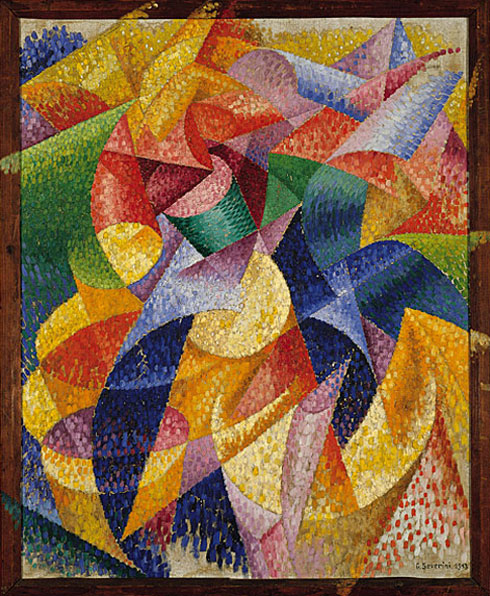
With regards to art, the Futurists incorporated elements of Neo-Impressionism and Cubism to create an original style that expressed the dynamism, energy and movement of modern life. Their art is distinctive in that most of the time they made use of a process known as divisionism, which meant that they broke light and colour down into a series of dots and geometric forms.

Sea = Dancer
(1914)
Gino Severini

 Abstract Speed + Sound
 (1913–1914)
Giacomo Balla

The City Rises
(1910)
Umberto Boccioni

While looking for more contemporary examples of art inspired by the futurist movement, I came across the art work (shown below) by Mark Webster. Comparing the works shown above with the one below, one can immediately notice the aggressive use of line and simple but bold colours. 

Abstract Geometric Futurist Figurative Oil Painting
Mark Webster


I will definitely be making use of a combination of these colours in my design and further enhancing the aspect of movement by including lines and shapes in subtle but effective way. 


References:

TATE - Futurism [online]. Available at <http://www.tate.org.uk/whats-on/tate-modern/exhibition/futurism> [Accessed 15th December, 2013]

The Solomon R. Guggenheim Foundation (SRGF), 2013. Collection Online - Futurism [online]. Available at <http://www.guggenheim.org/new-york/collections/collection-online/movements/195215/description> [Accessed 15th December, 2013]


Image sources: 

http://upload.wikimedia.org/wikipedia/commons/f/fe/Umberto_Boccioni_001.jpg

http://upload.wikimedia.org/wikipedia/en/1/12/GBallaArt.jpg

http://markadamwebster.com/workszoom/897562

http://www.designishistory.com/files/gimgs/32_futurism01.jpg


Monday, 28 October 2013

Sherlock Holmes (2009) - The opening scene and the first fight scene

Is it the soundtrack, action or excellent acting skills that make me want to see this film over and over again? I don't know. What I do know is that Sherlock Holmes, directed by Guy Ritchie and featuring the talents of Robert Downey Jr. and Jude Law, has become one of my all-time favourite films. In this post I will be discussing the first two-and-a-half minutes of the film. 


The opening scene of the film starts with cobbled streets - a key feature in London during the 18th century - which immediately sets the scene. The track 'Discombobulate' composed for the film by Hans Zimmer begins to play which sounds dramatic yet slow, however begins to build up. The camera moves upwards in a follow shot of a horse and carriage; the sound of the clomping horse hooves momentarily dominates the soundtrack. Soon after we notice and increase in camera movement as the camera moves towards the carriage and zooms inside. This increase in speed mimics the speed of the carriage and this ultimately generates a sense of urgency and movement. After several close-up shots of the weapons being handled by two male characters, we are introduced to a man running, as though he is a suspect and the carriage is following him. Through a close-up shot, the camera then reveals that the man is the protagonist. Soon after, a voice-over is used as the leading character stands against a wall in a building as he contemplates his next moves. This attack scene is in slow motion and the music is muted. The scene then flashes forward to when he leaps out and attacks a man using the fight moves stated in the voice-over. The scene ends with the protagonist taking his attacker's hat and swiftly descending a spiral staircase.

Emphasis on movement in this scene is created through the use of music, slow motion and contrasting brisk camera movements in certain moments, and close-up shots. 


References:

IMDb. Sherlock Holmes (2009) [online]. Available at <http://www.imdb.com/title/tt0988045/> [Accessed 28th October, 2013]

Image source:

http://2.bp.blogspot.com/MSaOPLoLR3w/Tu6JwQTrqpI/AAAAAAAACMc/9WEqiLhPF4g/s400/zz+fighting+ring+sherlock_holmes50.jpg

Video sources:

http://www.youtube.com/watch?v=098QxdbedQI&list=PL0BD4DDEDB4BC7E80

http://www.youtube.com/watch?v=XSc_pRWkegg&list=PL0BD4DDEDB4BC7E80


Battleship Potemkin - the 'Odessa Steps' scene

Battleship Potemkin is a 1925 silent film directed by Sergei Eisenstein. It presents a dramatized version of the mutiny that occurred in 1905 when the crew of the Russian battleship Potemkin rebelled against their officers of the Tsarist regime. 


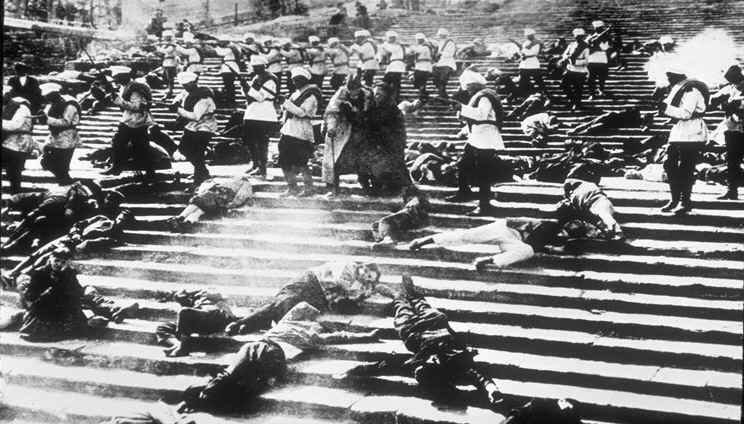
The most celebrated scene in the film is the massacre of civilians on the Odessa Steps. This scene has been described as one of the most influential in the history of cinema, because it introduced concepts of film editing and montage to cinema. 

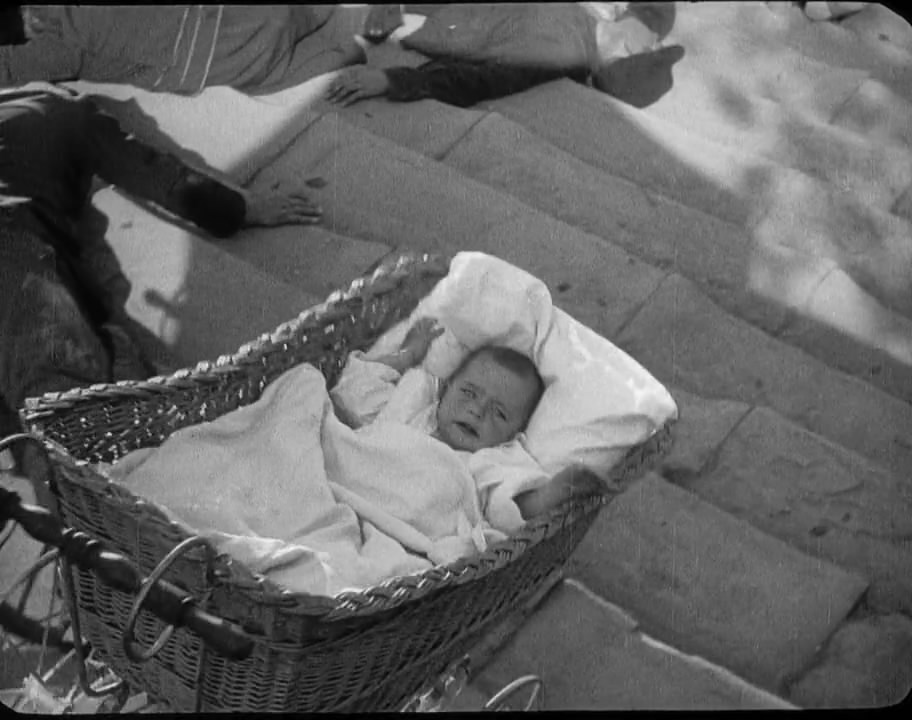
In this scene, the audience experiences emotional intensity through movement and editing. Once can notice the close-ups of the people rushing chaotically down the steps as they see the soldiers marching down towards them. The implication of rushing movement is also shown through the long shots of the same scene. The chaotic movement is superseded by the soldiers rhythmically marching down the steps. The effect is also enhanced by the increase in tempo and the accelerated rhythm of the music. There is a reversal of the downward movement and this is seen by the slow and solemn movement of the woman as she carries her dead child up the stairs towards the soldiers. Once the woman is shot, the focus goes back on the crowd rushing downwards. The scene ends with a slight increase in rhythm and tempo as the focus becomes the baby's carriage rolling down the steps amidst the fleeing crowd.


A wide shot of the massacre on the 'Odessa Steps'


The boots of the soldiers shown
marching down the 'Odessa Steps'


A baby in a carriage falling down the 'Odessa Steps'


References:

Micheal McVey, 2010. Montage and Juxtaposition in “Battleship Potemkin” – Odessa Steps Sequence [online] Available at <http://skiffleboom.wordpress.com/2010/05/06/montage-and-juxtaposition-in-%E2%80%9Cbattleship-potemkin%E2%80%9D-%E2%80%93-odessa-steps%C2%A0sequence%C2%A0from%C2%A0michael%C2%A0mcvey-skiffleboom-com/> [Accessed 28th October, 2013]


Image sources:

http://upload.wikimedia.org/wikipedia/commons/6/67/Potemkinmarch.jpg

http://upload.wikimedia.org/wikipedia/commons/e/e2/Odessastepsboots.jpg

http://upload.wikimedia.org/wikipedia/commons/0/0b/Odessastepsbaby.jpg


Video source:

http://www.youtube.com/watch?v=Ps-v-kZzfec

Sunday, 27 October 2013

Movement in Futurist Fashion Design

Futurism was an avant-garde movement which originated in Italy in the 20th Century by the Italian poet Filippo Tommaso Marinetti. The main aim of the Futurists was to destroy older forms of culture and demonstrate the beauty of modern life. They practised in every art form - be it paintings, sculptures, graphic design and fashion amongst others. Whatever the medium, their aim was to emphasize themes associated with contemporary concepts of the future, including speed, technology, youth and violence. 


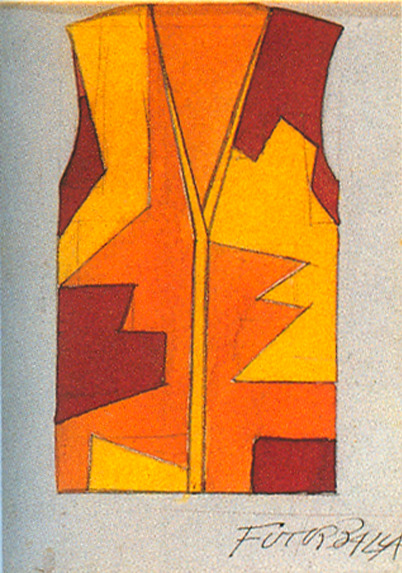
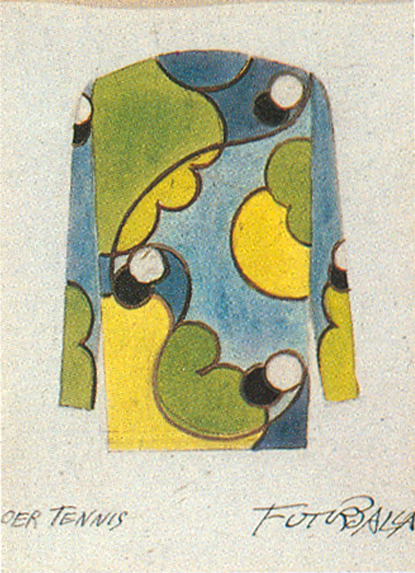
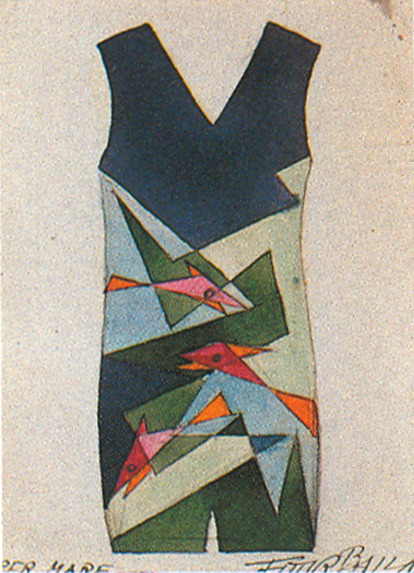
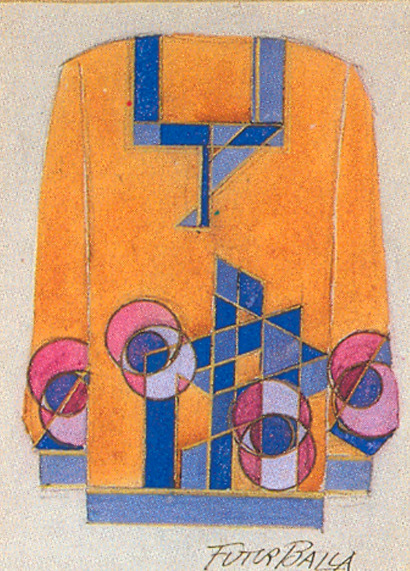
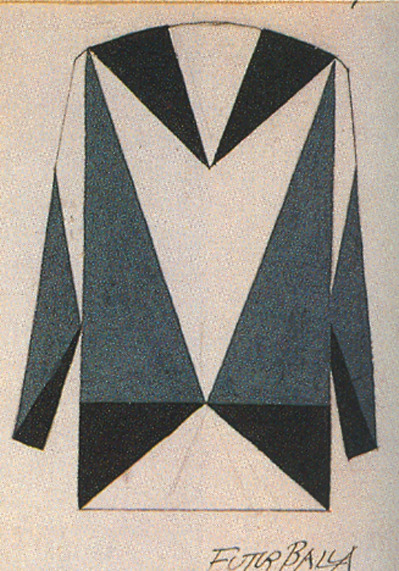
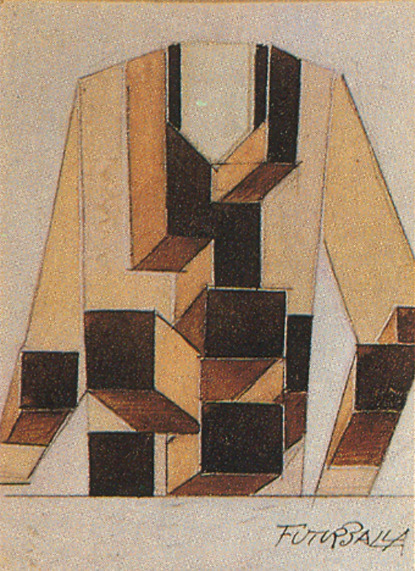
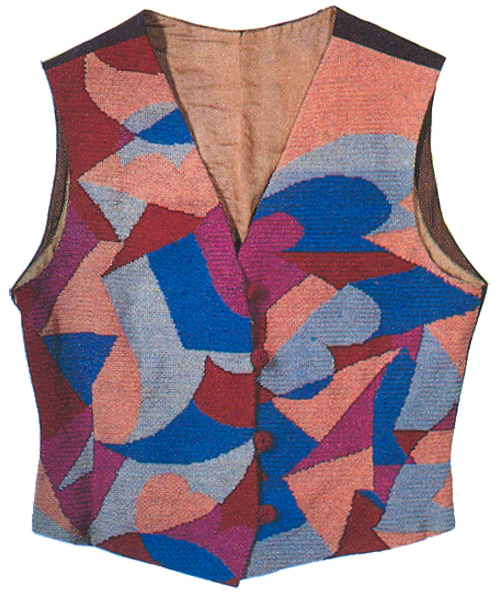
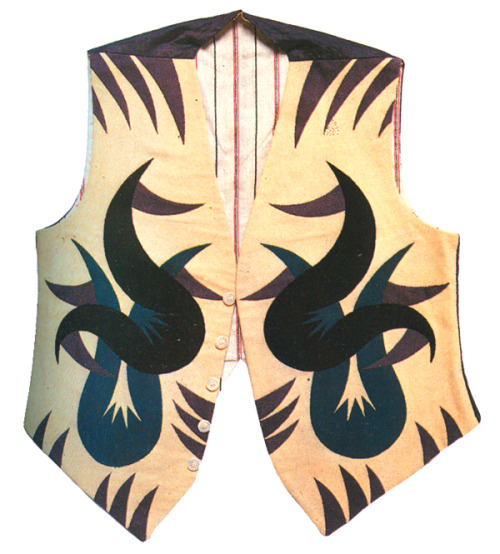
Considered the father of Futurist fashion, Giacomo Balla began designing textiles and suits in 1912/1913. With asymmetrical cuts and diagonal surface patterns, the brightly coloured outfits were a direct translation of the dynamic "force-lines" of his painted canvases. The Futurists were aggressively against clothing with frivolous detail, expensive fabrics and furthermore, class distinction in dress. Instead they promoted clothing designed in sleek lines and simple shapes which promoted the unencumbered movement of the human body, and the fast-paced rhythm of modern life as was evoked by dynamic textile designs and asymmetrical cuts.


With regards to colour, the Futurists despised the half-tone murky colours, and this can be seen in the way they chose their colours. They opted for bold and brightly intense colours in alarming combinations. This shocking choice of colours was done on purpose so as to unsettle traditional tastes in clothing. 


One can also note the dynamic designs in cut and texture to accompany the vibrancy of colour of the clothing. Asymmetrical and energized patterns consisting of shapes such as triangles, cones and circles were used since they believed that clothing in these designs integrated the sensations of movement and thus reflect the energy of a new urban society. 


References:

Leila Hartly,2010. Futurist Fashion [online]. Available at <http://leilahartley.wordpress.com/2010/10/24/futurist-fashion/ > [Accessed 27th October, 2013]

College Arts Association, Emily Braun. Futurist Fashion: Three Manifestoes [online]. Available at <http://historytransformationofdesign.weebly.com/uploads/1/1/7/2/11722228/futurist_fashion.pdf > [Accessed 27th October, 2013]

http://etd.lib.fsu.edu/theses_1/available/etd-04132004-000259/unrestricted/02_alm_text.pdf (no information available) [Accessed 27th October, 2013]

Images source: http://flommus.tumblr.com/page/241

Movement in Duchamp's 'Nude Descending the Staircase, No.2'

Marcel Duchamp (1887-1968) was a French-American painter and mixed media artist who is best known today as being one of the most influential figures of modern art. Despite not being in alliance with any of the movements, Duchamp was associated with and greatly influenced by Cubism, Dadaism and Surrealism. His art sought to engage the intellect and imagination of the viewer instead of just the eyes - portraying invisible worlds instead of just visible ones. His aim was to introduce the fact that art can be about ideas and not just about worldly things. Duchamp refused to give in to the rules of an established art system, and this can be seen in his works which are characterized by their humour, the variety and unconventionality of the media used and most importantly the incessant probing of the boundaries of art. It is this 'new art' which makes Marcel Duchamp one of the artists in the history of art who has had the most impact on artists many centuries later. 


Nude Descending Staircase, No.2
(1912)

Nude Descending Staircase, No.2 is one of Duchamp's paintings which caused quite a stir when it was presented since it depicted a mechanical portrayal of a subject which was once so sensual and classical. Instead of capturing the woman restricted to the confines of the bedroom, Duchamp records the entire process of the woman coming down the stairs. 

In this oil painting, one can see the influences of Cubism and Futurism. The former can seen through the deconstruction of forms and monochromatic tonality which were major characteristics of the Cubist movement. The latter is seen in the way that Duchamp doesn't immortalise a single pose or gesture, but he captures the motion and energy of the body as it moves by painting each static phase (like the Futurists who were obsessed with notions of velocity). 

Essentially, the painting is made up of abstract lines and planes, but they are assembled in such a way so as to suggest rhythm and convey the movement of the figure. The dark outlines show the contours of the body while also emphasizing the dynamics of the moving figure by acting as motion lines. There are also some accented arcs made up of dotted lines which suggest the thrusting pelvic motion. Despite being monochromatic, the use of tones and shades of the ochres and browns in the painting are also essential in depicting movement. The colour seems to be fairly darker at the upper left corner than the centre and bottom right corner of the painting. This was probably done to show the initial movement - an action which occurred previous to the ones that followed. The shaded planes also help to give depth and volume to the form. 


References:

Andrew Stafford, 2008. Making Sense of Marcel Duchamp [online]. Available at <http://www.understandingduchamp.com/> [Accessed 26th October, 2013]

Terry Riggs, 1997. TATE - Marcel Duchamp [online]. Available at <http://www.tate.org.uk/art/artists/marcel-duchamp-1036> [Accessed 26th October, 2013]

MoMa, 2013. The Collection - Marcel Duchamp [online]. Available at <http://www.moma.org/collection/browse_results.php?artistFilterInitial=&criteria=O%3AAD%3AE%3A1634&page_number=1&template_id=6&sort_order=1> [Accessed 26th October, 2013]

The Solomon R. Guggenheim Foundation (SRGF), 2013. Collection Online - Marcel Duchamp [online]. Available at <http://www.guggenheim.org/new-york/collections/collection-online/artists/bios/1174> [Accessed 26th October, 2013]

Image source: http://upload.wikimedia.org/wikipedia/en/c/c0/Duchamp_-_Nude_Descending_a_Staircase.jpg