Showing posts with label Design. Show all posts

Sunday, 9 March 2014

(Resubmission) Elsa Schiaparelli - "that Italian artist who makes clothes"

The main idea for my visual concept is to design an evening gown with a twist, in that I want it to be elegant and classy yet modern. As I was conducting research for my previous blog posts, I came across a designer who was influenced by the Futurist movement - one of the avante-garde movements of the early 20th century which focused on dynamism, movement and modernity. I am talking about none other than Elsa Schiaparelli. My main aim is to focus on recreating a similar dress structure to that designed by the mentioned designer and also to be inspired by the patterns and colours she used in her designs.
"that Italian artist who makes clothes"
(Coco Chanel, n.d.)

The phrase above represents designer Coco Chanel's opinion of Elsa Schiaparelli, her fashion rival. Elsa Schiaparelli was born in Rome in 1890. Being born into an aristocratic family was probably one of the main reasons why Schiaparelli wanted to express her freedom from a very young age. Despite having its benefits, an aristocratic lifestyle wasn't one which she was too keen about. For Schiaparelli, luxury was a barrier to creativity which she wanted to express through her art. This was the main reason for her decision to move to New York City and later on to Paris.


1927 saw the initiation of her career as a designer, starting off with a collection of clothing that consisted of black sweaters adorned with a white trompe l'oeil scarf at the neck. This particular design is said to be Schiaparelli's trademark, after having been a huge success in the fashion industry and was selected to appear in French Vogue. The peak of her career was probably the time when she collaborated with Surrealist artist Salvador Dali. Together they came up with shocking creations and designs such as the Shoe Hat and the Skeleton Dress - pieces which increased Schiaparelli's popularity as a designer not only in her time but also today.


Schiaparelli is known for introducing various styles and techniques into the history of fashion. For example, she created the revolutionary divided skirt, and introduced zippers in colours that matched the rest of the clothing. She was also one of the first to design accessories such as brooch-like buttons to adorn clothes. Over time, Schiaparelli came to be associated with a particular shade of magenta, what later on came to be known as 'Schiaparelli pink'. In her autobiography, she explains how she once saw a Cartier diamond owned by a friend of hers which bore that particular shade. Schiaparelli described the jewel's colour as "bright, impossible, impudent, becoming, life-giving [...] a shocking colour, pure and undiluted."

After spending the war period in New York, Elsa Schiaparelli returned to France, only to find that the fashion styles had changed. Her struggling to compete with designer Christian Dior's post-war 'New Look' led the way to the closing of her design house - the House of Schiaparelli - in 1954. Despite this, she still remains one of the most influential and prominent figures in the fashion industry. Elsa Schiaparelli died in 1973. 
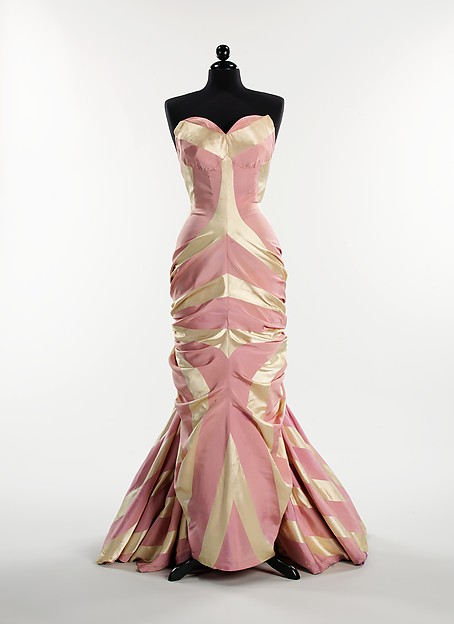


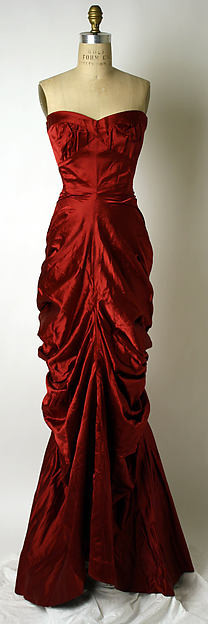
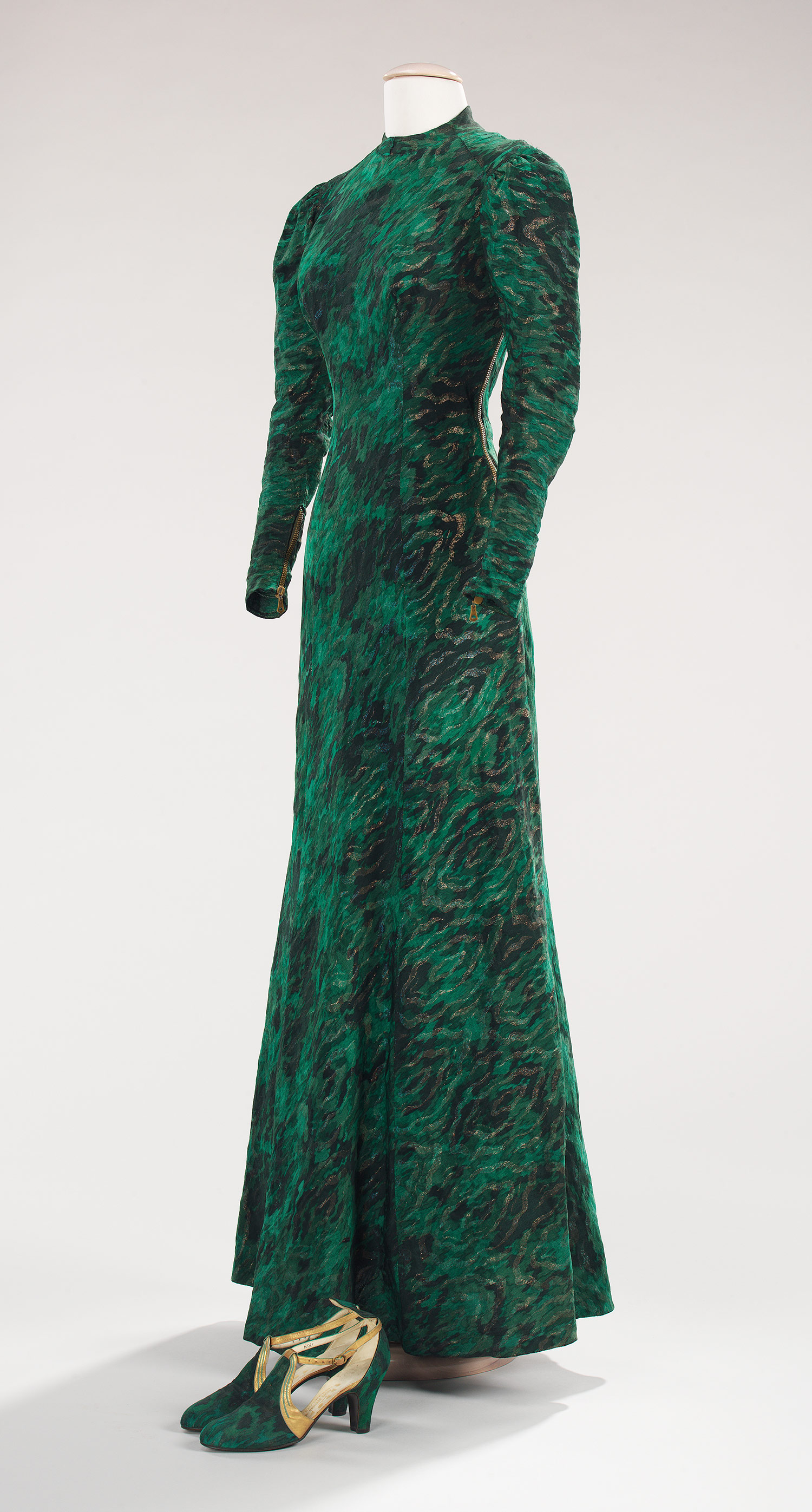
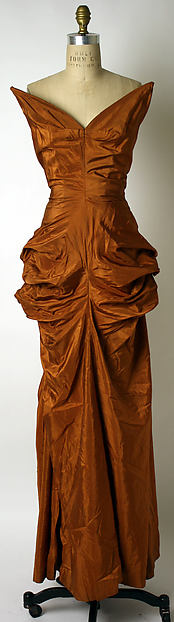
As one can note from the images above, Elsa Schiaparelli was clearly interested in designing clothes that were form-fitting and which flattered the female form. She also opts for the streamlined silhouette, and forms that created some sort of shape and fluidity. I will definitely be opting for a similar style in my design for the dress. 

References:

Vogue Style File - Elsa Schiaparelli (2012) [online]. Available at <http://www.vogue.co.uk/spy/celebrity-photos/2012/4/18/elsa-schiaparelli-style-file> [Accessed 16th December, 2013]

Reeder, Jan. "Elsa Schiaparelli (1890–1973)" [online]. Available at <http://www.metmuseum.org/toah/hd/elsa/hd_elsa.htm> [Accessed 16th December, 2013]

Image sources:

http://collections.vam.ac.uk/item/O15655/cravat-jumper-elsa-schiaparelli/

http://www.metmuseum.org/Collections/search-the-collections/105737?rpp=20&pg=2&ao=on&ft=elsa+schiaparelli&what=Evening+dresses&pos=23

http://www.metmuseum.org/Collections/search-the-collections/105736?rpp=20&pg=2&ao=on&ft=elsa+schiaparelli&what=Evening+dresses&pos=22

http://www.metmuseum.org/Collections/search-the-collections/157803?rpp=20&pg=1&ao=on&ft=elsa+schiaparelli&what=Evening+dresses&pos=17

http://www.metmuseum.org/collections/search-the-collections/156222?img=0

https://www.metmuseum.org/toah/works-of-art/2009.300.1168a-c

Monday, 16 December 2013

(Original) Elsa Schiaparelli - "that Italian artist who makes clothes"

The main idea for my visual concept is to design an evening gown with a twist, in that I want it to be elegant and classy yet modern. As I was conducting research for my previous blog posts, I came across a designer who was influenced by the Futurist movement - one of the avante-garde movements of the early 20th century which focused on dynamism, movement and modernity. I am talking about none other than Elsa Schiaparelli. My main aim is to focus on recreating a similar dress structure to that designed by the mentioned designer and also to be inspired by the patterns and colours she used in her designs.

"that Italian artist who makes clothes"
(Coco Chanel, n.d.)

Those were the words used by famous rival fashion designer Coco Chanel to describe Elsa Schiaparelli. Born in Rome in 1890 in an aristocratic family, Elsa showed signs of the need for personal freedom from a very young age - an aspect which would show up in her work later on. Living life with a certain amount of luxury thanks to her parents' wealth and social status was considered a bonus - in the eyes of others. On the contrary, she believed that luxury was stifling to her art and creativity, thus leading to her moving to New York City and later on to Paris. It was in 1927 that Shiaparelli began to design and make clothes with the encouragement of Paul Poiret, and later in that same year she started her own business.

Her first collection consisted of sweaters adorned with surrealist trompe l'oeil images - a theme that was to become Schiaparelli's trademark. It consisted of a black sweater with a white trompe l'oeil scarf at the neck. which was a particular success and was selected to appear in French Vogue. She then moved on to produce a collection named Pour le Sport, including clothing such as bathing suits, skiwear and linen dresses. She also created the revolutionary divided skirt. In 1931, Schiaparelli added evening-wear to her repertoire, strengthening her business further. Collaborating with Surrealist artist Salvador Dali on famous pieces such as the Shoe Hat, the Tears dress and the skeleton dress increased her fame not just in her time but also today.


Schiaparelli is known for introducing many styles and techniques into the history of fashion such as the creation of zippers in colours that matched the the rest of the clothing, introducing brooch-like buttons to adorn clothes, and also her association with a shade of magenta - which came to be known as "Schiaparelli pink". In her autobiography Schiaparelli explained that her fascination with the colour came from a Cartier diamond owned by her friend. She describes the jewel's colour as "bright, impossible, impudent, becoming, life-giving [...] a shocking colour, pure and undiluted."

She returned to France after spending the war period in New York, only to find that the fashion styles have changed and she struggled to compete with Christian Dior's post-war 'New Look'. The doors of the House of Schiaparelli - her design house - closed in 1954. Despite this, she still remains one of the most influential and prominent figures in the fashion industry. Elsa Schiaparelli died in 1973.


As one can note from the images above, Elsa Schiaparelli was clearly interested in designing clothes that were form-fitting and which flattered the female form. She also opts for the streamlined silhouette, and forms that created some sort of shape and fluidity. I will definitely be opting for a similar style in my design for the dress.


References:

Vogue Style File - Elsa Schiaparelli (2012) [online]. Available at <http://www.vogue.co.uk/spy/celebrity-photos/2012/4/18/elsa-schiaparelli-style-file> [Accessed 16th December, 2013]

Reeder, Jan. "Elsa Schiaparelli (1890–1973)" [online]. Available at <http://www.metmuseum.org/toah/hd/elsa/hd_elsa.htm> [Accessed 16th December, 2013]


Image sources:

http://collections.vam.ac.uk/item/O15655/cravat-jumper-elsa-schiaparelli/

http://www.metmuseum.org/Collections/search-the-collections/105737?rpp=20&pg=2&ao=on&ft=elsa+schiaparelli&what=Evening+dresses&pos=23

http://www.metmuseum.org/Collections/search-the-collections/105736?rpp=20&pg=2&ao=on&ft=elsa+schiaparelli&what=Evening+dresses&pos=22

http://www.metmuseum.org/Collections/search-the-collections/157803?rpp=20&pg=1&ao=on&ft=elsa+schiaparelli&what=Evening+dresses&pos=17

http://www.metmuseum.org/collections/search-the-collections/156222?img=0

https://www.metmuseum.org/toah/works-of-art/2009.300.1168a-c

Sunday, 27 October 2013

Movement in Futurist Fashion Design

Futurism was an avant-garde movement which originated in Italy in the 20th Century by the Italian poet Filippo Tommaso Marinetti. The main aim of the Futurists was to destroy older forms of culture and demonstrate the beauty of modern life. They practised in every art form - be it paintings, sculptures, graphic design and fashion amongst others. Whatever the medium, their aim was to emphasize themes associated with contemporary concepts of the future, including speed, technology, youth and violence. 


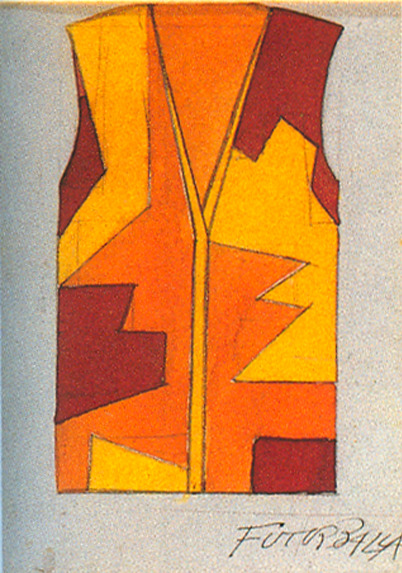
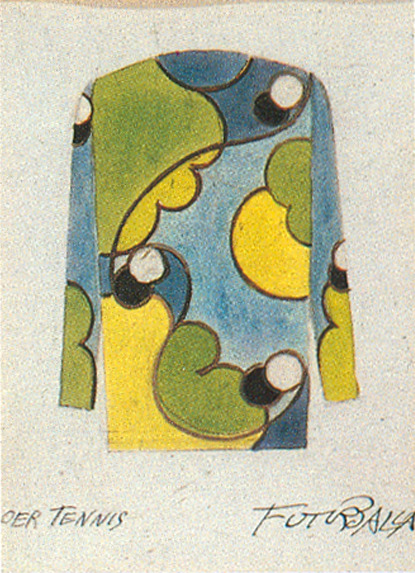
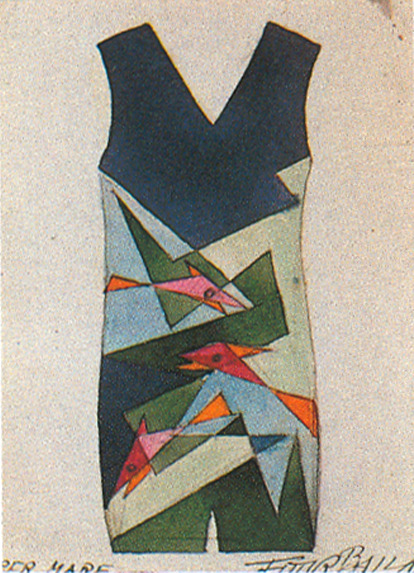
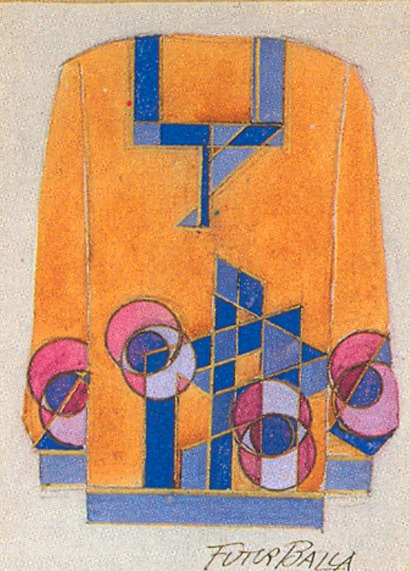
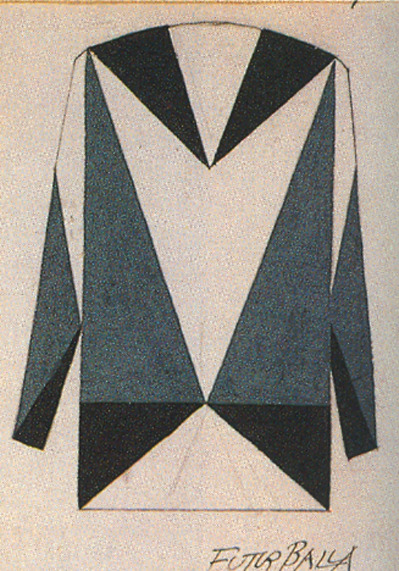
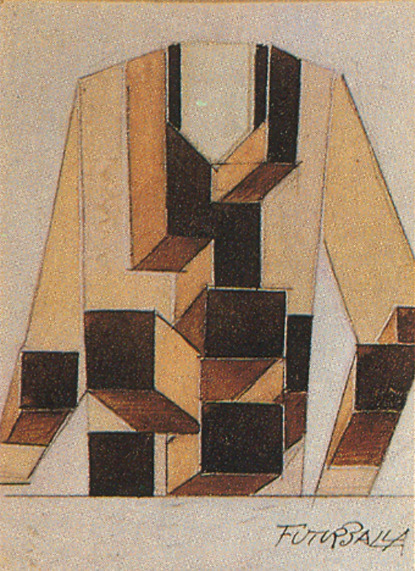
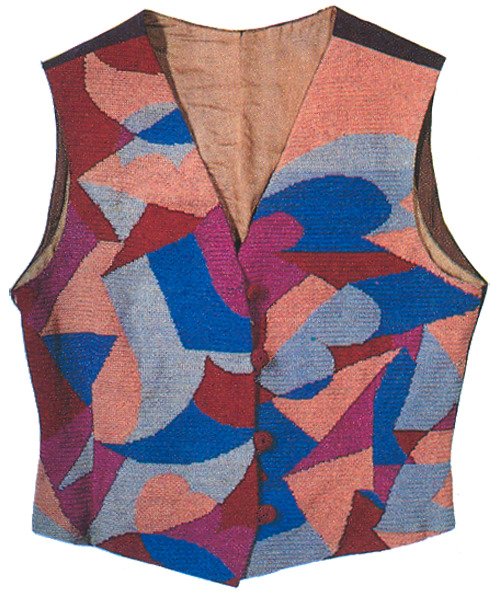
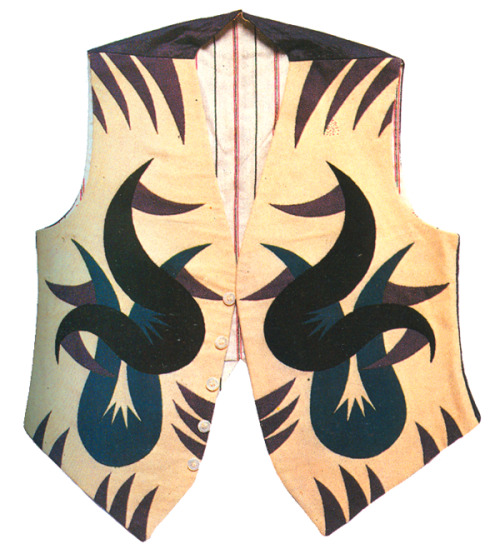
Considered the father of Futurist fashion, Giacomo Balla began designing textiles and suits in 1912/1913. With asymmetrical cuts and diagonal surface patterns, the brightly coloured outfits were a direct translation of the dynamic "force-lines" of his painted canvases. The Futurists were aggressively against clothing with frivolous detail, expensive fabrics and furthermore, class distinction in dress. Instead they promoted clothing designed in sleek lines and simple shapes which promoted the unencumbered movement of the human body, and the fast-paced rhythm of modern life as was evoked by dynamic textile designs and asymmetrical cuts.


With regards to colour, the Futurists despised the half-tone murky colours, and this can be seen in the way they chose their colours. They opted for bold and brightly intense colours in alarming combinations. This shocking choice of colours was done on purpose so as to unsettle traditional tastes in clothing. 


One can also note the dynamic designs in cut and texture to accompany the vibrancy of colour of the clothing. Asymmetrical and energized patterns consisting of shapes such as triangles, cones and circles were used since they believed that clothing in these designs integrated the sensations of movement and thus reflect the energy of a new urban society. 


References:

Leila Hartly,2010. Futurist Fashion [online]. Available at <http://leilahartley.wordpress.com/2010/10/24/futurist-fashion/ > [Accessed 27th October, 2013]

College Arts Association, Emily Braun. Futurist Fashion: Three Manifestoes [online]. Available at <http://historytransformationofdesign.weebly.com/uploads/1/1/7/2/11722228/futurist_fashion.pdf > [Accessed 27th October, 2013]

http://etd.lib.fsu.edu/theses_1/available/etd-04132004-000259/unrestricted/02_alm_text.pdf (no information available) [Accessed 27th October, 2013]

Images source: http://flommus.tumblr.com/page/241

Saturday, 26 October 2013

Movement in Cassandre's 'Dubo Dubon Dubonnet'

French-Ukrainian painter, lithographer and visual savant Adolphe Jean-Marie Mouron, better known as A. M. Cassandre (1901-1968), is one of most well-known and influential graphic designers in history. He is best known for his posters depicting objects which are made to stand out through the use of bold geometry and witty pictorial drama. Cassandre's work is generally Art Deco, though in some of his work we can see the influence of styles such as Cubism and Futurism. The philosophy behind his work was a simple one: telling a story through a poster by using simplistic design and block letters so that even the common man on the street could understand it. Cassandre was the first graphic designer to simplify his designs so that they could be read from fast moving vehicles, and also being the first to introduce the idea of serial posters - a group of posters to be seen in rapid succession to convey a complete idea.


Dubo Dubon Dubonnet
(1932)


Dubo Dubon Dubonnet is probably Cassandre's most famous work. He designed this three-part poster for the French aperitif 'Dubonnet' in 1932. It represents a man drinking the aperitif, depicted in three different stages in the form of a cinematic sequence, with the word DUBONNET placed under each panel. This in itself already shows motion. In the first panel, the man is looking at the glass. One can notice that the first image consists mainly of the outline of the figure. In the same way, the word DUBONNET is incomplete, with only DUBO shown in black. the next panel shows the progression of the man as he drinks; he is filled with colour and the words now show DUBON. The final panel depicts the man emptying the bottle, with the full name of the aperitif - DUBONNET - now showing. Cassandre's use of repetition evokes rhythm in the piece, with a sense of motion being created through the cinematic representation of the panels. One can also note the sweeping lines and forms used to convey movement, which allow the clarity and simplicity of the objects to work hand in hand with simplicity of the colour palette. Through this interplay of form, colour, words and picture, Cassandre was sure to capture the attention of all the passers-by that rushed around the city.


References:

Micheal Johnson. Cassandre: Art Deco Poster Designer [online]. Available at <http://arthistory.knoji.com/cassandre-art-deco-poster-designer/> [Accessed 28th October, 2013] 

Mickey Ross, 2012. A Flesh and Blood Recreation of the Famous Triptych “Dubo, Dubon, Dubonnet” [online]. Available at <http://rossartgroup.wordpress.com/2012/07/28/a-flesh-and-blood-recreation-of-dubo-dubon-dubonnet/ > [Accessed 28th October, 2013] 

Tannah Shukri, 2011. Art Deco and Artists [online]. Available at <http://tannahshukri-historyofdesign.blogspot.com/2011/12/art-deco-and-artists.html > [Accessed 28th October, 2013] 

Art Factory. Cassandre [online]. Available at <http://www.artyfactory.com/art_appreciation/graphic_designers/cassandre.htm> [Accessed 28th October, 2013] 

Stedelijk Museum Amsterdam, 2013. COLLECTION - A.M. CASSANDRE: DUBO, DUBON, DUBONNET, 1932 [online]. Available at <http://www.smcs.nl/en/artwork/8856-dubo-dubon-dubonnet> [Accessed 28th October, 2013] 

Image source: http://www.artyfactory.com/art_appreciation/graphic_designers/cassandre/dubo.jpg